Welcome to
Upper West Side
Discover the Upper West Side, where landmark architecture, world-class cultural institutions,
and tree-lined residential streets create one of Manhattan's most enduring neighborhoods.
Bordered by Central Park and the Hudson River, the Upper West Side offers a distinctive balance of culture, character, and residential charm. From grand prewar apartments and historic brownstones to celebrated restaurants and neighborhood institutions, discover what makes this part of Manhattan a perennial favorite.
Stretching from 59th Street to 110th Street, the Upper West Side has long been one of Manhattan's most established residential neighborhoods. Its transformation from farmland and country estates began in the late 19th century, accelerated by the development of Central Park and the expansion of public transportation. The arrival of grand apartment buildings, including the Dakota and the Ansonia, helped establish the neighborhood's architectural identity. Over time, the Upper West Side became a center for artists, writers, academics, and performers, shaping the culturally rich community that defines it today.
The Upper West Side real estate market is distinguished by its concentration of prewar cooperative apartments, historic townhouses, and an evolving collection of luxury condominiums. Properties overlooking Central Park and Riverside Park are particularly sought after, while landmark buildings throughout the neighborhood offer architectural character and generously proportioned residences. Buyers are drawn to the area's established residential character, cultural amenities, and variety of housing options, from classic six apartments to contemporary new developments.
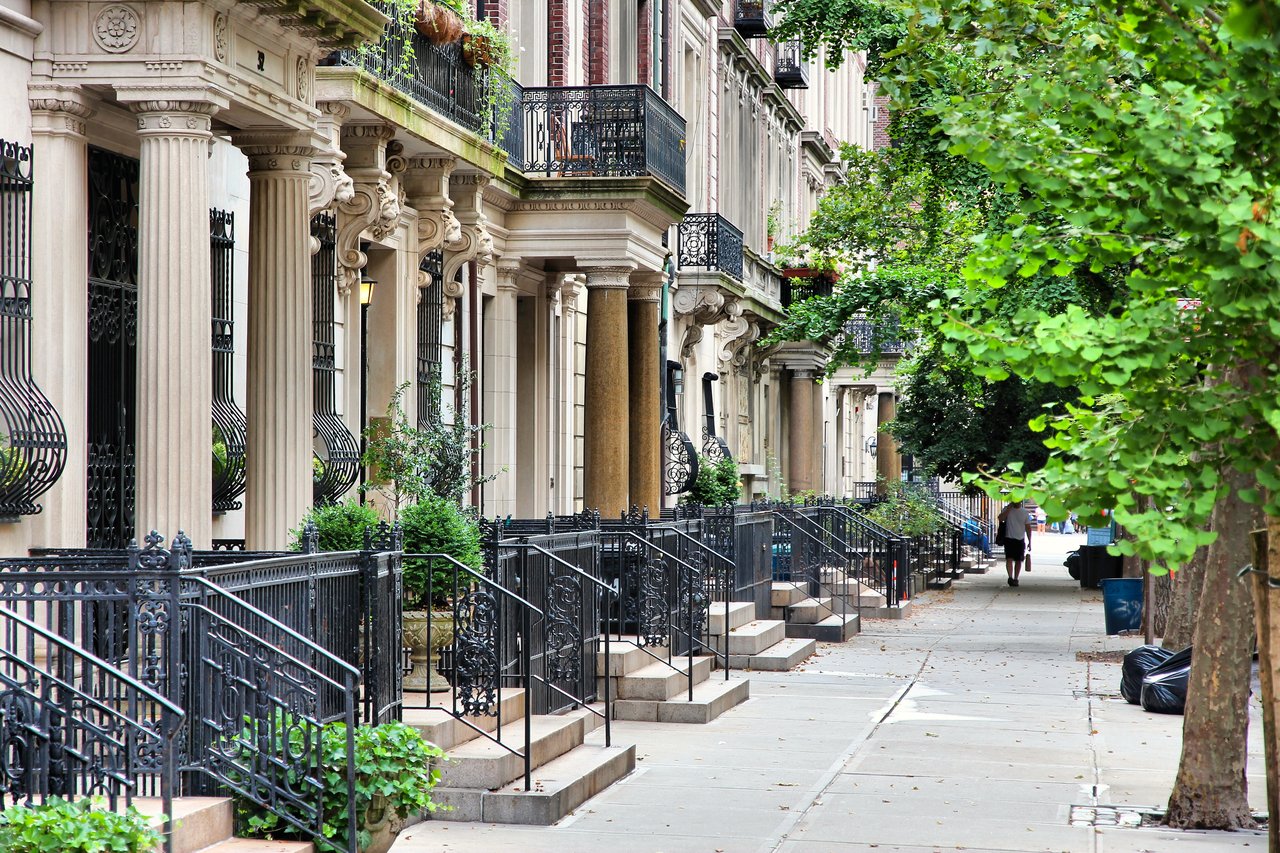
Few neighborhoods capture the architectural history of New York quite like the Upper West Side. Along Central Park West, iconic buildings such as the San Remo, the Beresford, and the Dakota define the skyline, while Riverside Drive and West End Avenue are lined with elegant prewar residences. Beaux-Arts, Renaissance Revival, and Art Deco influences can be found throughout the neighborhood, alongside beautifully preserved brownstones and contemporary residential towers. This architectural variety gives the Upper West Side its unmistakable sense of place.
Life on the Upper West Side moves at a distinctly neighborhood pace. Mornings might begin with coffee from a local café, a walk through Central Park, or a run along the Hudson River. Broadway, Amsterdam Avenue, and Columbus Avenue offer an abundance of independent shops, specialty food markets, bookstores, and restaurants. Long-standing institutions like Zabar's and Citarella remain neighborhood staples, while the nearby parks provide an extension of everyday living. Whether enjoying a quiet residential block or the energy of a bustling avenue, residents experience a side of Manhattan that feels both connected to the city and comfortably removed from its intensity.
The Upper West Side's dining scene reflects its character: established, eclectic, and effortlessly welcoming. Longstanding neighborhood favorites share the streets with contemporary restaurants, intimate wine bars, and celebrated culinary destinations.
A beloved neighborhood institution since 1983, Café Luxembourg is known for its classic French-American bistro fare and lively, timeless atmosphere.
An Upper West Side landmark, this century-old appetizing shop is celebrated for its smoked fish, traditional Jewish delicacies, and quintessential New York character.
A contemporary Mediterranean restaurant offering inventive dishes inspired by the cuisines of the Levant, in a stylish yet inviting setting.
The Upper West Side is home to some of New York City's most significant cultural destinations. Lincoln Center anchors the neighborhood's southern end, bringing world-renowned opera, ballet, classical music, and theater to its stages. Farther north, the American Museum of Natural History and the New-York Historical Society offer exceptional opportunities to explore art, science, and history. Evenings can be as lively or as relaxed as residents prefer, from a performance at the Beacon Theatre to cocktails at a neighborhood bar or dinner at a favorite local restaurant.
One of the world's leading performing arts destinations, home to the Metropolitan Opera, New York City Ballet, and New York Philharmonic.
A celebrated New York institution featuring extraordinary exhibitions on natural history, science, and the world around us.
Living on the Upper West Side offers a distinctive combination of classic New York architecture, cultural richness, and everyday convenience. Its residential streets are known for their historic brownstones, elegant apartment buildings, and established neighborhood character. With Central Park to the east and Riverside Park to the west, residents enjoy exceptional access to green space, waterfront paths, playgrounds, and recreational facilities. The neighborhood's cultural institutions, independent businesses, and dining destinations contribute to a community where daily routines and memorable experiences exist side by side. The Upper West Side also offers convenient transportation, with multiple subway lines and crosstown bus routes connecting residents to the rest of Manhattan. From the energy surrounding Lincoln Center to the quieter streets near Riverside Drive, each section of the neighborhood has its own distinct appeal.
The Upper West Side offers buyers an exceptional range of residential opportunities, from landmark prewar cooperatives to newly constructed luxury condominiums. Classic six and seven-room apartments remain particularly desirable for their gracious layouts, architectural detailing, and sense of history, while newer developments offer contemporary finishes and modern amenities. Location plays an important role in property values, with Central Park views, Riverside Drive addresses, and proximity to cultural institutions often influencing buyer demand. For buyers and sellers alike, understanding the differences between individual buildings, ownership structures, and micro-neighborhoods is essential to navigating this nuanced market.
The neighborhood offers a diverse selection of properties, including prewar cooperative apartments, historic brownstones, luxury condominiums, and contemporary new developments. Many older residences feature classic layouts, high ceilings, and original architectural details.
Its combination of landmark architecture, access to Central Park and Riverside Park, renowned cultural institutions, and established neighborhood amenities makes the Upper West Side appealing to a wide range of residents.
The neighborhood is served by the 1, 2, and 3 subway lines along Broadway and the B and C lines along Central Park West. Crosstown buses provide additional connections to the East Side and other parts of Manhattan.
219,343 people live in Upper West Side, where the median age is 46 and the average individual income is $126,285. Data provided by the U.S. Census Bureau.
Total Population
Median Age
Population Density
Average individual Income
There's plenty to do around Upper West Side, including shopping, dining, nightlife, parks, and more. Data provided by Walk Score and Yelp.
Explore popular things to do in the area, including Nationwide Produce Incorporated, 97st Deli, and Solis's Video.
| Name | Category | Distance | Reviews |
Ratings by
Yelp
|
|---|---|---|---|---|
| Dining | 0.52 miles | 0 reviews | 0/5 stars | |
| Dining | 1.02 miles | 0 reviews | 0/5 stars | |
| Shopping | 1.14 miles | 0 reviews | 0/5 stars | |
| Active | 0.27 miles | 0 reviews | 0/5 stars | |
| Active | 0.3 miles | 0 reviews | 0/5 stars | |
| Active | 0.71 miles | 0 reviews | 0/5 stars | |
| Active | 0.82 miles | 0 reviews | 0/5 stars | |
| Active | 0.85 miles | 0 reviews | 0/5 stars | |
| Active | 1.01 miles | 4 reviews | 4/5 stars | |
| Active | 1.07 miles | 0 reviews | 0/5 stars | |
| Active | 1.11 miles | 0 reviews | 0/5 stars | |
| Beauty | 0.13 miles | 1 review | 5/5 stars | |
| Beauty | 0.39 miles | 2 reviews | 3/5 stars | |
| Beauty | 0.85 miles | 0 reviews | 0/5 stars | |
| Beauty | 0.93 miles | 1 review | 5/5 stars | |
|
|
||||
|
|
||||
|
|
||||
|
|
||||
|
|
||||
|
|
Upper West Side has 107,551 households, with an average household size of 2. Data provided by the U.S. Census Bureau. Here’s what the people living in Upper West Side do for work — and how long it takes them to get there. Data provided by the U.S. Census Bureau. 219,343 people call Upper West Side home. The population density is 139,057 and the largest age group is Data provided by the U.S. Census Bureau.
Total Population
Population Density Population Density This is the number of people per square mile in a neighborhood.
Median Age
Men vs Women
Population by Age Group
0-9 Years
10-17 Years
18-24 Years
25-64 Years
65-74 Years
75+ Years
Education Level
Total Households
Average Household Size
Average individual Income
Households with Children
With Children:
Without Children:
Blue vs White Collar Workers
Blue Collar:
White Collar:

590 Madison Avenue New York, NY 10022
590 Madison Avenue New York, NY 10022