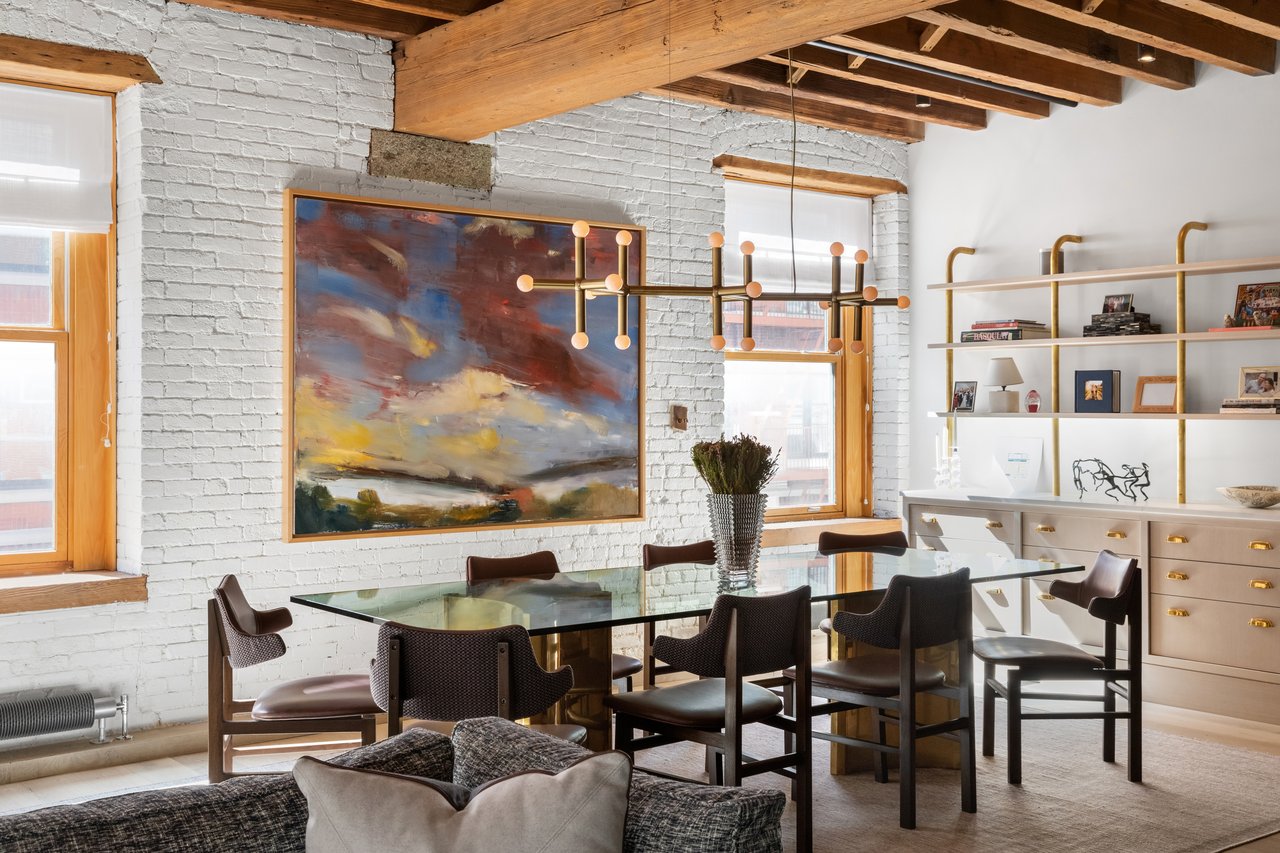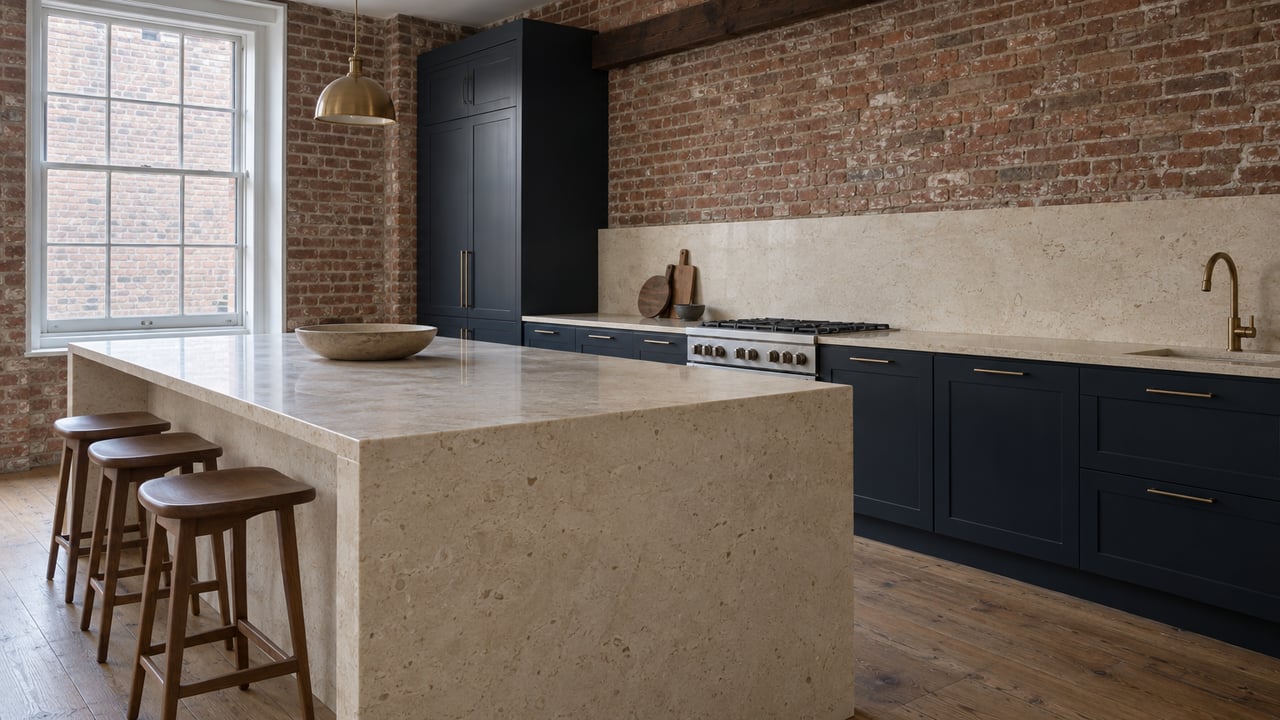
"I'm not sure what we'll do now." That's what 80-year-old artist Zigi Ben-Haim told a reporter this year, standing in the SoHo loft he's lived in since 1979, after New York's highest court ruled that residents like him owe the city more than $100 per square foot to convert their homes out of a decades-old artist-only zoning category. It's the kind of quote that makes a legal story feel like a neighborhood story, and it is one. But the ruling that produced it applies to a category of SoHo loft that most buyers touring the neighborhood this fall will never encounter.
That's the part the headlines skip. The fight over the SoHo-NoHo Arts Fund fee is real, it's active, and it's now sitting in a petition at the U.S. Supreme Court. It is also, by the local preservation group SoHo Alliance's own account, mostly irrelevant to how the neighborhood's housing stock actually trades, because most SoHo buildings converted out of artist-only status years ago through a different legal door and never owed the fee at all. The number that matters to a buyer standing in front of a listing isn't the appellate outcome. It's three letters on a document sitting in a file at the Department of Buildings.
What the Court Actually Decided
On January 13, 2026, the New York Court of Appeals reversed a lower appellate panel and upheld the Arts Fund fee in a 6-1 decision, Matter of Coalition for Fairness in Soho & Noho, Inc. v. City of New York. The case centers on Joint Living-Work Quarters for Artists, or JLWQA, a zoning designation created in 1971 that restricted occupancy in certain former manufacturing lofts to artists certified by the city's Department of Cultural Affairs. The 2021 SoHo/NoHo rezoning gave JLWQA owners a voluntary path out: pay a one-time, non-refundable fee of $100 per square foot into a city arts fund, and the unit converts to ordinary residential use.
Writing for the majority, Judge Jenny Rivera reasoned that owners never held a property right to the more valuable, unrestricted version of their unit in the first place, so trading a restricted interest for an unrestricted one in exchange for a fee isn't a taking under the Fifth Amendment. Judge Michael Garcia dissented alone, arguing the fee should have faced the same constitutional scrutiny the Supreme Court applied to permit conditions in Nollan v. California Coastal Commission and Koontz v. St. Johns River Water Management District.
The Coalition, represented by Pacific Legal Foundation, filed a cert petition asking the Supreme Court to take the case, backed by an amicus brief joining the Manhattan Institute with the National Association of Realtors, the New York State Association of Realtors, the National Association of Home Builders, and the National Apartment Association. Attorney Christopher Kieser, who argued the case, has said publicly that even a favorable cert grant would put a new decision more than a year out, according to reporting in amNewYork. Council Member Christopher Marte, whose district covers SoHo and NoHo, is pursuing a parallel legislative fix that would lower or eliminate the fee, though nothing has passed yet.
The Distinction That Actually Decides Your Deal
Here's the part a court ruling can't tell you by itself. As of 2022, roughly 1,636 units in SoHo and NoHo carried the JLWQA designation on their Certificate of Occupancy, and only 36 of them were actually occupied by a certified artist. The city had approved fewer than 100 new certifications in the preceding decade. That gap between designation and reality is the whole story of how this neighborhood's loft market actually works, and it splits into three distinct categories that look identical on a walkthrough and are not identical on paper.
| Category | Artist certification required | Arts Fund fee owed | Where to confirm |
|---|---|---|---|
| Unconverted JLWQA | Yes, unless grandfathered pre-2021 | Yes, if converting | Certificate of Occupancy via DOB records |
| Former IMD (Loft Law) | No | No, exempt by 2023 city settlement | NYC Loft Board registration |
| Fully converted residential | No | Already paid or never applicable | Certificate of Occupancy |
That middle row matters more than the lawsuit does for most buyers. Separately from the fee litigation, the city reached a settlement establishing that units registered as Interim Multiple Dwellings under the state Loft Law, current or former, are exempt from both the artist certification requirement and the Arts Fund contribution, regardless of what the Certificate of Occupancy technically says. Those owners can sell to anyone. Many SoHo loft buildings went through exactly this process decades ago. Which is why the neighborhood's own preservation group, when asked what the January ruling means in practical terms, put it bluntly: for most buildings, nothing changes, because most buildings were never in the fee's path to begin with.
The catch is that "most" isn't "all," and a loft that looks like every other converted industrial space on Greene Street can still carry an unconverted JLWQA designation if it never went through IMD registration. Pulling the Certificate of Occupancy is the only way to know which of the three rows you're standing in, and it's a document you can request from the Department of Buildings before you ever make an offer.
What the Fee Actually Costs, and Why Waiting Has a Price Tag
For the units that do owe it, the math is not abstract. At the original $100-per-square-foot rate set in 2021, a 2,500-square-foot loft owes $250,000 to convert. The rate rises 3% annually, which means the same conversion has gotten more expensive every year since the rezoning passed, independent of anything the courts decide. Estimates for the current per-square-foot rate vary depending on which year's compounding a given source starts counting from, with figures cited this year ranging from just above $100 to north of $115, but the direction is not in dispute. It only goes up. A Supreme Court cert denial, a favorable ruling more than a year from now, or no ruling at all, none of those outcomes pause the annual increase.
That fee shows up in listing prices, not just legal filings. A loft in the Cast-Iron District that once belonged to designer Gaetano Pesce, an A.I.R.-designated building, had its asking price cut by $100,000 within the last two months, a reduction consistent with the discount effect this kind of designation can have on prime SoHo real estate. Buyers and their attorneys are treating the conversion fee, where it applies, as a legitimate line item to negotiate against the sale price rather than something they simply absorb.
Financing adds another layer. Lenders have grown more cautious about buildings lacking a standard residential Certificate of Occupancy, a pattern that hardened after the 2008 financial crisis and hasn't fully softened since. National banks in particular can be reluctant to underwrite a mortgage on a JLWQA unit, which pushes some buyers toward smaller portfolio lenders more familiar with SoHo's zoning history. It's also worth knowing that the informal practice of having buyers sign a "SoHo letter," a written acknowledgment that they understand the artist-certification requirement, predates all of this litigation by more than a decade and still surfaces in some co-op closings today.
Reading a Listing Like Someone Who Knows the History
None of this is new tension for the neighborhood. The artists who organized to win JLWQA status in 1971 were the same coalition that fought off Robert Moses' proposed Lower Manhattan Expressway, which would have cut through Broome Street. Enforcement of the artist requirement was light for decades, which is how a designation covering 1,636 units ended up with only 36 certified-artist occupants by 2022. That gap between the rule on paper and the way lofts were actually occupied is part of why the Arts Fund fee became such a flashpoint once the 2021 rezoning attached a price to closing it.
The current environment is stricter, and buyers should treat it that way. Before falling for the ceiling height or the cast-iron columns, pull the CO, ask whether the building has a Loft Board IMD registration, and confirm with the seller's attorney which of the three categories applies. That single document tells you more about your closing timeline, your financing options, and your future resale value than anything coming out of Washington.
Do I have to be a certified artist to buy a SoHo loft today? Only if the specific unit still carries an unconverted JLWQA designation and you intend to occupy it without paying the conversion fee. Buildings that completed IMD conversion, or that were never JLWQA to begin with, carry no such requirement.
Does the Supreme Court petition freeze the fee in the meantime? No. The city's fee schedule, including the 3% annual increase, remains in effect unless a court order or new legislation changes it. Waiting for a ruling means waiting at a rising price.
Is the fee the same for co-ops and condos? The per-square-foot calculation doesn't distinguish between the two. What differs is the approval path, since co-op boards can add their own review on top of the city's process, so buyers of co-op units should budget extra time for board sign-off regardless of the fee question.
Knowing which category a specific SoHo loft falls into, before an offer, before a mortgage application, before a closing date gets set, shapes every decision that follows. If you're evaluating a SoHo loft and want to talk through its Certificate of Occupancy history, the Kirsten Jordan Team invites you to Inquire Now.