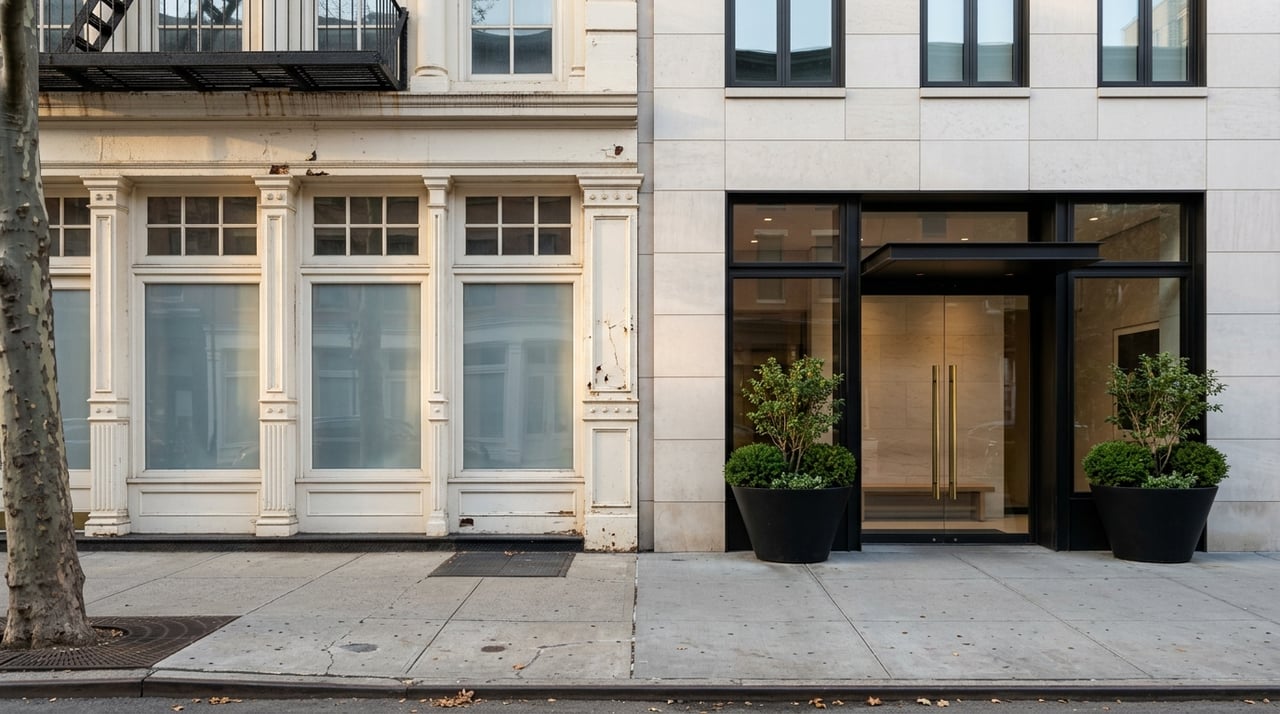
Trying to choose between a sleek new condo and a classic SoHo loft? In this neighborhood, that decision is rarely just about finishes or age. You are often weighing two very different ways of living: one rooted in SoHo’s industrial past and one built around modern convenience. If you are buying in SoHo, understanding that tradeoff can help you focus faster, tour smarter, and choose a home that fits how you actually want to live. Let’s dive in.
Why SoHo Feels Different
SoHo is not a typical Manhattan condo market. According to New York City Planning materials, the SoHo-Cast Iron Historic District covers 26 blocks and about 500 buildings, making it the largest concentration of cast-iron facades in the world.
That history shapes what you see today. Instead of block after block of similar apartment product, SoHo gives you a split market: preserved loft buildings with original industrial character and a smaller set of newer luxury condos, often on the neighborhood’s edges or in nearby Hudson Square. StreetEasy’s SoHo neighborhood data also notes that most housing options remain in historic cast-iron buildings and co-ops, even as new development has entered the area.
Historic Loft Appeal
If you picture SoHo as soaring ceilings, oversized windows, and open living spaces, you are picturing the neighborhood’s loft DNA. The Landmarks Preservation Commission’s district history explains that these buildings were originally industrial and commercial spaces, later converted into studios, galleries, and living quarters.
That origin story still matters to buyers. Historic lofts are often valued for light, scale, and authenticity as much as for room count or amenities. In SoHo, a loft may feel less like a standardized apartment and more like a singular architectural space.
What a loft layout usually offers
Historic SoHo lofts tend to prioritize volume over compartmentalized rooms. City planning documents describe the area’s buildings as having large window openings, tall ground floors, and broad floor plates that support the classic open-loft feel.
Real examples help make that concrete. 114 Mercer Street, a 1903 co-op, features keyed elevator access to full-floor lofts. At 76 Crosby Street, one listing highlighted a 5,262-square-foot corner loft with about 11.5-foot ceilings and 22 oversized windows.
For many buyers, that kind of space is the point. You may get a home with dramatic proportions, flexible layout potential, and details that are difficult to replicate in new construction.
What to expect day to day
Historic loft living can feel special, but it is not always friction-free. Some buildings offer a lighter service package than newer condos, and layouts can be less conventional. Depending on the building, you may also be balancing charm with quirks tied to age, infrastructure, or building rules.
That does not mean historic automatically means inconvenient. Some boutique loft buildings provide meaningful services, but the package tends to vary more building by building than in a typical new development.
New Development Strengths
If your priority is turnkey living, new development may feel like the simpler answer. In SoHo and the surrounding area, newer condos are more likely to be purpose-built for how buyers live today, with integrated systems, amenities, and a more standardized ownership experience.
A strong example is 565 Broome Street, a 2016 condo in Hudson Square with 112 units and a distinctly modern tower profile. That building includes features such as concierge and doorman service, elevator access, parking, storage, a gym, pool, deck, media room, playroom, central air, and in-unit washer/dryer.
Why new condos feel different
The biggest difference is usually convenience. A new development often gives you modern mechanical systems, predictable layouts, and a fuller amenity package. If you travel often, want full-service staffing, or prefer a move-in-ready home, those benefits can carry real weight.
There is also a design difference. While historic lofts often feel irregular and one-of-a-kind, newer SoHo-area condos may feel more polished, vertical, and contemporary. Planning documents for the broader area note that new construction has increasingly appeared in transitional zones and broader corridors outside the most protected historic core.
Amenities vs Character
For many buyers, this is the real decision point. Do you want architecture and atmosphere, or do you want service and ease? In SoHo, those priorities often point you in different directions.
Here is a simple way to think about it:
| If you value... | You may lean toward... |
|---|---|
| Open volume and original character | Historic loft |
| Full-service living and amenities | New development |
| One-of-a-kind layout | Historic loft |
| Turnkey systems and predictability | New development |
| Loft style with some services | Boutique historic condo |
Historic lofts often win on feeling. New developments often win on function. Neither is better across the board. The right fit depends on how you live and what tradeoffs you are comfortable making.
Compare Carrying Costs Carefully
It is easy to assume newer means more expensive each month, but SoHo does not always work that way. Luxury historic lofts and luxury new development can both come with significant ongoing costs.
For example, one 76 Crosby Street listing showed monthly common charges of $10,265 and taxes of $4,314. One 565 Broome Street listing showed common charges of $8,763 and taxes of $8,038.
These are individual listings, not market averages, but they make an important point. You should compare the actual building budget, taxes, reserve health, and any assessments rather than making assumptions based on building age alone.
Renovation Rules Matter in SoHo
If you are drawn to a historic loft and already imagining new windows, exterior updates, or rooftop work, pause before you plan too far ahead. In SoHo’s landmarked areas, exterior changes are often subject to preservation review.
The Landmarks Preservation Commission states that most changes to front and rear facades in historic districts require review, and if a project needs a Department of Buildings permit, it often also needs LPC approval. Routine repairs may be simpler, but larger exterior work can involve additional time and process.
What that means for buyers
Before you buy, it is smart to look beyond finishes and ask practical questions:
- What renovations has the building already completed?
- Are there current or planned assessments?
- How strong are the building reserves?
- What level of alteration review applies to future work?
- How much flexibility do you really need after closing?
If you want to personalize a home quickly and with fewer moving parts, a newer condo may be easier. If you value architectural integrity and are comfortable with a more measured process, a historic loft may still be the better fit.
A Smart SoHo Decision Framework
When buyers feel stuck, it usually helps to strip the decision down to priorities. In SoHo, your choice often becomes clearer when you focus on how you want the home to function, not just how it looks in photos.
Choose new development if...
- You want turnkey living from day one
- You value amenities like a gym, pool, parking, or full-service staff
- You prefer modern systems such as central air and in-unit laundry
- You want fewer renovation unknowns
- You spend time away from the city and want a more lock-and-leave setup
Choose a historic loft if...
- You want original SoHo character and industrial scale
- You value oversized windows, ceiling height, and open volume
- You are comfortable with a more customized, less standardized layout
- You appreciate the rarity of preserved loft stock
- You are willing to navigate building-specific quirks or preservation rules
Consider a hybrid option if...
- You want loft character with some level of service
- You like boutique condo living more than tower living
- You want a more design-driven experience without going fully bare-bones
This middle lane can be compelling in SoHo, where building types vary widely. Some buyers find their best fit in a historic building that has been updated to support a more polished daily routine.
Think Building First, Category Second
It is tempting to ask which product type is the better investment, but that question is usually too broad. In SoHo, scarcity, design, condition, and building quality all matter.
StreetEasy notes that vacancy and turnover in SoHo are notably low, while the landmarked core preserves much of the neighborhood’s original fabric. That supports the idea that special, well-positioned properties can remain highly sought after, but it does not guarantee that every historic loft or every new condo performs the same way.
A smarter approach is to evaluate the specific asset in front of you. Look at the building’s financials, ownership structure, carrying costs, condition, and resale appeal. In a nuanced market like SoHo, the details often matter more than the label.
If you are weighing a new development purchase against a classic loft, the right guidance can save you time and sharpen your negotiating strategy. The Kirsten Jordan Team advises buyers across Manhattan with a high-touch, design-aware approach that helps you assess not just the apartment, but the full ownership picture.
FAQs
What is the main difference between a SoHo new development and a historic loft?
- A SoHo new development usually offers more amenities, modern systems, and turnkey convenience, while a historic loft typically offers more original character, open volume, and architectural individuality.
Are historic lofts in SoHo usually larger than new condos?
- Many historic lofts are known for large floor plates, high ceilings, and oversized windows, although actual size varies by building and unit.
Do SoHo historic buildings have stricter renovation rules?
- Yes. In landmarked parts of SoHo, many exterior changes require review by the Landmarks Preservation Commission, especially if the work also requires a Department of Buildings permit.
Are monthly costs lower in SoHo historic lofts than in new developments?
- Not necessarily. Both luxury lofts and luxury new developments can have substantial monthly common charges, taxes, or maintenance-related costs.
Is Hudson Square part of the SoHo new development search?
- Often, yes. Many newer luxury condos that buyers consider part of the broader SoHo search are located on the neighborhood edge or in nearby Hudson Square.
How should you choose between a SoHo loft and a new condo?
- Start with your priorities: if you want amenities and ease, new development may fit better; if you want authentic character and scale, a historic loft may be the stronger match.