If you are thinking about selling a SoHo loft right now, you are probably asking two big questions: how strong is the market, and what will buyers actually pay for your space? In a neighborhood where architecture, light, layout, and provenance all shape value, the answer is rarely simple. This guide will help you understand what today’s luxury buyers are looking for, how pricing works in SoHo’s current market, and how to prepare your loft for a launch that feels strategic, polished, and competitive. Let’s dive in.
SoHo Market Conditions Today
SoHo remains one of Manhattan’s most expensive sales markets, but buyers are still selective. StreetEasy’s 2025 year-in-review ranked SoHo as the city’s priciest sales neighborhood with a median asking price of $3,995,000, which was down 5% year over year. Its neighborhood data also shows a median sale near $3.5 million and a sales median of 56 days on market.
That tells you two things at once. First, SoHo still commands top-tier pricing. Second, buyers are paying close attention to how each loft compares on condition, layout, and overall experience.
There is also slightly more choice than before. StreetEasy shows SoHo sales inventory up 8% year over year, which means your loft is likely entering a market with more direct competition than many sellers expect.
At the same time, Manhattan’s broader market has stayed active. Corcoran’s Q1 2026 report says closings rose 1% year over year to 2,757, total sales volume rose 4% to $6.2 billion, and transactions above $3 million increased 10% year over year. For SoHo sellers, that points to real demand in the luxury tier, but also a market that rewards precision.
Why SoHo Lofts Compete Differently
A SoHo loft is not just another Manhattan apartment. Buyers in this segment are often shopping for a feeling as much as a floor plan.
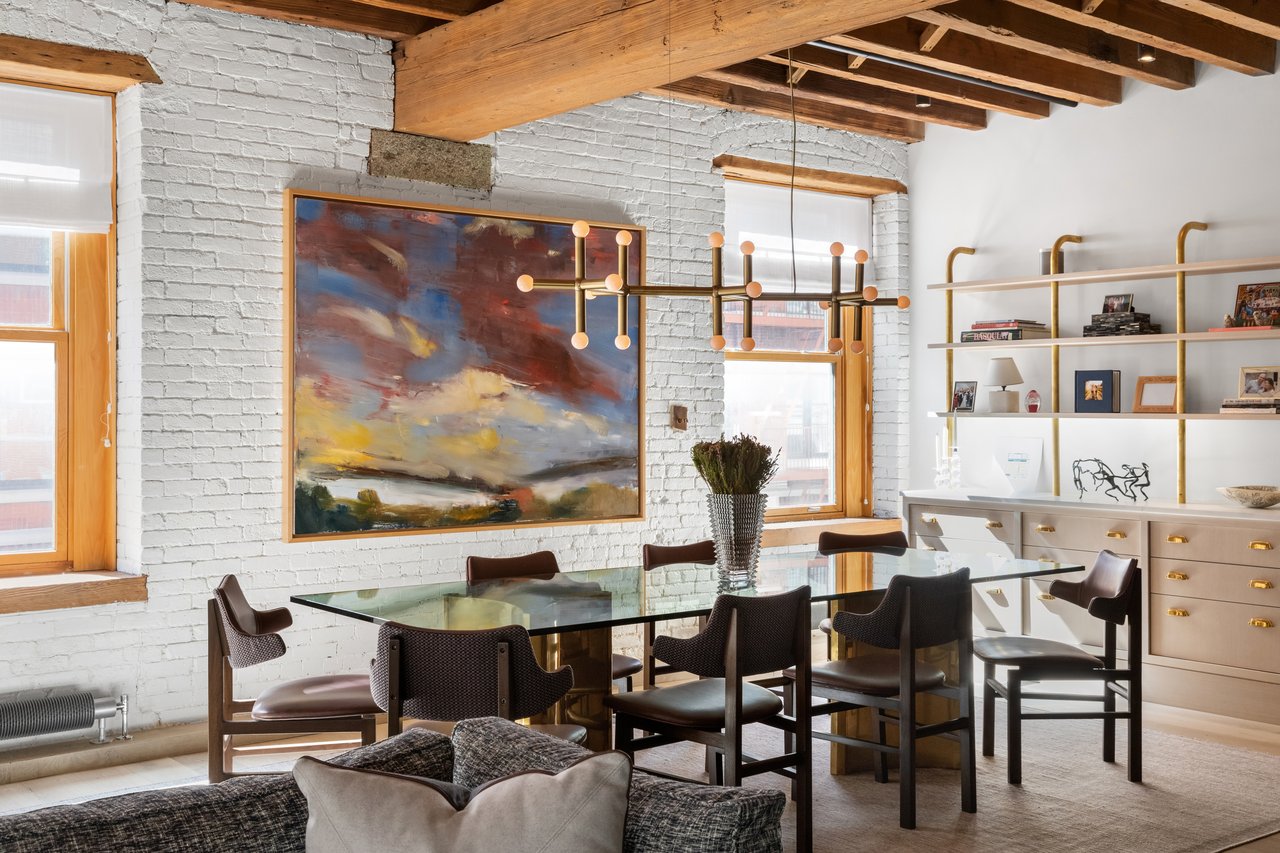
Lofts are typically defined by soaring ceilings, open layouts, concrete or hardwood floors, and industrial details like exposed brick, beams, and visible piping. In SoHo, that character matters because the neighborhood’s identity is deeply tied to its architecture and built history.
NYC planning materials describe the SoHo-Cast Iron Historic District as a 26-block district with 500 buildings and the largest concentration of full and partial cast-iron facades in the world. That kind of architectural context gives your loft an edge, but it also means authenticity can carry real weight with buyers.
Many buyers still love open, airy spaces filled with light, but they also want flexibility. According to March 2026 reporting on open floor plans, buyers continue to value openness while also placing importance on privacy and clearer room definition. In practical terms, that means your loft may be judged not only on scale, but on how well the layout supports modern daily life.
What Buyers Notice First
Light and volume
In SoHo, buyers tend to react quickly to ceiling height, window scale, and natural light. Large windows, long sightlines, and bright interiors help a loft feel expansive and memorable.
This is especially important online, where first impressions happen fast. According to NAR’s online-visibility guidance, 81% of buyers rated listing photos as the most useful feature in their home search, and the lead image often determines whether they click or keep scrolling.
Layout and usability
Open space is appealing, but buyers also want to picture how they would actually live in it. They are often evaluating whether the home can support entertaining, working from home, overnight guests, and day-to-day privacy without losing the openness that makes a loft special.
Usable wall space, furniture placement, and room definition matter more than many sellers realize. A beautiful raw volume can underperform if it feels hard to live in.
Original character
Authentic loft details still matter. Exposed brick, columns, beams, old wood floors, and industrial proportions can help your home stand out when they feel preserved rather than overwritten.
Buyers of existing homes often cite charm and character as key reasons for choosing resale properties. In SoHo, that often translates into stronger interest in lofts that respect their industrial roots while still feeling polished and current.
Pricing a SoHo Loft in a Disciplined Market
This is not a market where broad neighborhood averages should drive your list price. A SoHo loft with perfect light, strong proportions, and tasteful updates may command very different pricing from another loft a few blocks away with a less functional layout or heavier renovation needs.
Corcoran’s Q1 2026 report notes that well-priced homes continue to move quickly and that the market is rewarding accuracy between price and value. For sellers, that means pricing has to be tied to your exact building type, line, condition, view, and renovation level.
It is also important to separate asking-price headlines from actual closed-sale behavior. SoHo’s median asking price, median sale price, and days on market each measure different parts of the selling process. They are useful signals, but they are not interchangeable.
If your loft sits at the higher end of the luxury spectrum, pricing discipline becomes even more important. Elliman’s Q4 2025 Manhattan report showed a luxury median sales price of $6,038,000, 105 days on market, and a 6.4% average listing discount. That does not mean your loft will take that long to sell, but it does show how unforgiving the top of the market can be when pricing starts too high.
How Much Should You Renovate?
Most SoHo loft sellers do not need a full transformation before going to market. In many cases, the smartest improvements are corrective and visual rather than structural.
That usually means focusing on the details that pull attention away from the architecture. Decluttering, deep cleaning, repairing visible flaws, and refining presentation often do more for buyer perception than a major overhaul.
This approach also fits what many resale buyers want. Existing-home buyers often value charm, character, and overall value, so updates tend to work best when they support the loft’s original scale and identity rather than erase it.
If your building falls within a designated landmark or historic district, timing matters too. The Landmarks Preservation Commission requires approval for alterations affecting designated landmarks or historic districts, so any visible work should be planned carefully before launch.
Preparing Your Loft for Photography and Showings
In a design-forward category like SoHo lofts, presentation is not optional. It shapes how buyers understand space, scale, and lifestyle.
NAR’s 2025 staging report found that 83% of buyers’ agents said staging made it easier for buyers to visualize a property. The same report found that 29% said staging increased the value offered by 1% to 10%, and 49% of sellers’ agents saw faster sales.
For lofts, staging should help the architecture lead. You want buyers to notice the windows, ceiling height, texture, and proportions first, while still understanding how the space functions.
Focus on the right rooms
The same staging report found that living rooms, primary bedrooms, and kitchens were the most important spaces to stage. In a SoHo loft, those spaces often flow together visually, so consistency matters.
A restrained approach usually works best. Clean styling, edited furnishings, and intentional spacing can make a large room feel both aspirational and livable.
Let the architecture read first
Your goal is not to fill every corner. It is to create a visual story that highlights sightlines, window scale, ceiling height, and flexibility.
That often means reducing visual noise, defining zones clearly, and avoiding anything that competes with the loft’s original details. In this category, less can often read as more.
Private Launch or Public Listing?
Some luxury sellers consider starting off-market or with limited exposure. That can make sense when privacy is the top priority or when you are still finishing preparation.
But if your main goal is price discovery, broad exposure usually gives you the strongest position. NAR’s consumer guidance explains that MLS exposure reaches the largest pool of prospective buyers, while office-exclusive and delayed-marketing options intentionally limit exposure.
Research also shows a meaningful tradeoff. A 2025 Bright MLS study found that office-exclusive listings took a median 37 days to contract versus 20 days for standard listings, with no price advantage after controlling for location and property characteristics.
For a SoHo loft, the case for public launch is often strong because the neighborhood is highly searched and attracts buyers who move quickly when the value feels right. A short private phase can be useful for discretion or final prep, but it should usually be a strategic exception, not the default.
A Smarter Selling Strategy for SoHo
Selling a SoHo loft in today’s luxury market is not just about listing a property. It is about presenting a story with discipline.
The strongest results often come from a clear sequence: prepare the home thoughtfully, launch with polished photography and staging, and price with precision from day one. In a neighborhood where buyers are comparing light, authenticity, and layout as carefully as they compare square footage, details matter.
If you are planning a sale, the opportunity is still strong. SoHo remains a top-tier market, Manhattan’s $3 million-plus segment has been active, and buyers continue to pay attention to standout product. The key is making sure your loft enters the market with the right pricing, presentation, and exposure strategy behind it.
If you are considering selling a SoHo loft and want a tailored strategy for pricing, preparation, and launch, the Kirsten Jordan Team can help you position your home for today’s luxury buyer.
FAQs
How is the SoHo loft market performing right now?
- SoHo remains one of Manhattan’s most expensive sales neighborhoods, with StreetEasy reporting a $3,995,000 median asking price in its 2025 year-in-review, a median sale near $3.5 million, and a sales median of 56 days on market.
What do buyers look for in a SoHo loft?
- Buyers often focus on light, ceiling height, window scale, layout flexibility, and original loft character such as exposed brick, beams, and industrial proportions.
Should you renovate before selling a SoHo loft?
- Usually, the highest-impact work is visual and corrective, such as decluttering, cleaning, and fixing visible issues, while preserving the loft’s defining character.
Does landmark status affect a SoHo loft sale?
- It can affect your preparation timeline because alterations affecting designated landmarks or historic districts require approval from the Landmarks Preservation Commission.
Should you sell a SoHo loft off-market first?
- A private launch can make sense if discretion is the priority, but if your goal is broad exposure and stronger price discovery, a full public launch is usually the better fit.
Why does pricing matter so much for SoHo lofts?
- Luxury buyers in SoHo compare each loft closely by building type, line, condition, light, and layout, so accurate pricing from the start can help avoid longer market time and larger discounts.