Looking for a Manhattan neighborhood that feels both polished and lived-in? The Upper East Side has long carried a reputation for elegance, but daily life here is not just about image. It is about how your mornings flow, where your errands happen, how easily you move through the day, and what kind of city experience waits just outside your door. From Madison Avenue’s service-rich blocks to the cultural stretch of Museum Mile, this is a neighborhood defined by rhythm, convenience, and texture. Let’s dive in.
What daily life on the Upper East Side feels like
The Upper East Side works best when you think of it as a collection of connected pockets, not one uniform neighborhood. Public materials identify Lenox Hill, Yorkville, and Carnegie Hill as distinct parts of the larger area, and that helps explain why the neighborhood can feel different from one avenue to the next.
That layered identity is part of the appeal. You get a residential setting with long-established housing, but you also see ongoing change in the form of added housing units and evolving street life. In the NYU Furman Center’s 2025 profile, the neighborhood counted 198,035 residents in 2023 and remained one of the city’s highest-income and highest-rent areas.
The same profile reported a median household income of $165,280, a homeownership rate of 37.6%, and 3,500 housing units added from 2010 to 2024. Most of those added units were market-rate, which is a useful reminder that the Upper East Side continues to evolve even while keeping its prewar identity.
Everyday comfort also shapes the neighborhood’s mood. New York City health and housing data shows relatively low household crowding at 4.4% and AC ownership at 96.3%, details that support what many residents already feel: this is a neighborhood built around residential routines more than a late-night scene.
Madison Avenue anchors everyday errands
If you want to understand the Upper East Side in motion, start with Madison Avenue. The Madison Avenue BID defines its district from East 57th to East 86th Street along Madison and nearby side streets, covering about 250 buildings and more than 800 businesses.
That concentration gives you a strong daily-use corridor. Boutiques, galleries, restaurants, hotels, and residential buildings sit alongside the practical services that make city life smoother. The BID also provides sanitation, promotion, advocacy, and public safety patrols from 9 a.m. to 7 p.m. seven days a week, which helps explain the avenue’s orderly, polished feel.
For residents, Madison is not only a destination. It is part of the routine. You can move from a coffee stop to an appointment, handle errands, and connect to other parts of Manhattan without leaving the neighborhood’s main commercial spine.
Getting around from Madison Avenue
Transit access is a big reason Madison stays central to daily life. According to the BID’s visitor guide, Madison is served by the M1, M2, M3, and M4 buses, with crosstown options including the M86, M79, M72, M66, M57, and Q32.
Subway access nearby includes the 4, 5, and 6 lines, plus the F and N, Q, and R lines. In practical terms, that means the avenue supports both local errands and broader commuting patterns. For many residents, that balance is one of the Upper East Side’s strongest advantages.
Why Madison feels visually consistent
Part of Madison Avenue’s appeal is visual. On designated buildings, storefront changes are reviewed by the Landmarks Preservation Commission, which also maintains special rules and master plans for Madison Avenue storefronts in key Upper East Side historic districts.
You may not think about those rules while walking the avenue, but you notice the effect. The streetscape often feels curated and coherent, even when the blocks are busy. That consistency adds to the sense that Madison Avenue is both active and carefully maintained.
Museum Mile shapes a cultural routine
A few blocks west, Fifth Avenue offers a very different kind of daily asset. Museum Mile runs from 82nd Street to 110th Street, creating one of the city’s most concentrated cultural corridors.
The 2025 Museum Mile Festival release lists participating institutions including The Met, Neue Galerie, Guggenheim, Cooper Hewitt, The Jewish Museum, the Museum of the City of New York, El Museo del Barrio, and The Africa Center. That lineup matters because it places major cultural institutions in a sequence you can actually use as part of everyday life.
This is not just a special-occasion amenity. The density of institutions makes repeat visits easy, whether you are stepping into a museum for an hour, planning a family outing, or building a weekend routine around exhibits and nearby park access.
The museum corridor, block by block
The cultural concentration is especially striking when you look at the addresses. The Met sits at 82nd and Fifth, the Guggenheim at 89th, Cooper Hewitt at 91st, and The Jewish Museum at 92nd.
Farther north, the Museum of the City of New York spans 103rd to 104th Streets, El Museo del Barrio sits at 104th to 105th, and The Africa Center anchors 110th Street. In everyday terms, that means a long stretch of Fifth Avenue offers a steady rhythm of architecture, programming, and public life.
Central Park adds breathing room
One reason the Upper East Side feels so livable is how naturally Central Park fits into the day. The park does not sit at the edge as an afterthought. It actively shapes routines on the neighborhood’s western side.
The Central Park Conservancy places Conservatory Water at East 75th Street, the Reservoir between 86th and 96th Streets, and Conservatory Garden between 104th and 106th Streets. Those destinations each support a different pace, from quiet pauses to exercise to leisurely walks.
Conservatory Water offers a calm, slower setting with model sailboats and a boathouse café. The Reservoir is one of the park’s most popular running destinations. On the east side of the park, the paths and gardens tend to create a softer, more residential cadence that pairs well with the Upper East Side’s everyday feel.
Carl Schurz Park offers a quieter edge
If Central Park shapes the west side of the neighborhood, Carl Schurz Park gives the eastern edge its own local identity. The park runs from East End Avenue to the East River between 84th and 90th Streets.
New York City Parks describes it as one of the city’s most dog-friendly parks, with a waterfront promenade and views toward Roosevelt Island, the Triborough Bridge, Randall’s and Wards islands, and Gracie Mansion. That setting creates a very different mood from the avenue corridors.
For residents farther east, daily life can feel quieter and more local. The waterfront edge adds open sky, river views, and a slower pace that contrasts nicely with the busier commercial avenues farther west.
Side streets reveal the housing story
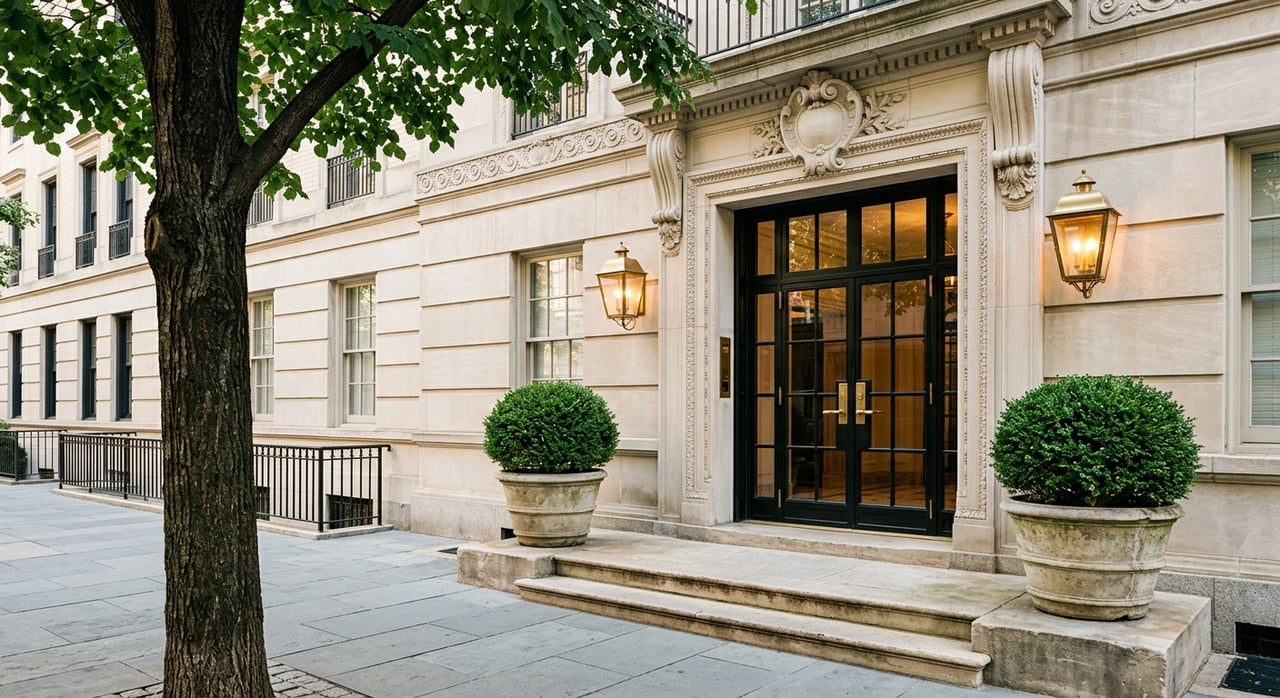
The Upper East Side’s housing stock is a big part of its identity. City planning materials describe a mix of five- to six-story townhouses built between the 1890s and 1930s, multi-family apartment buildings, and taller 12- to 20-story apartment houses along the avenues.
That built form creates a recognizable Manhattan pattern. Avenue living tends to offer a more active, connected experience, while side streets often feel calmer and more residential. For buyers, that distinction matters because the same neighborhood can support very different lifestyles depending on where you land.
The area’s development also reflects New York’s transit history. Landmarks materials note that growth was tied first to elevated rail service in the late 1870s and later to the subway in 1918, helping establish the Upper East Side as a high-quality residential address close to business and cultural centers.
Why the Upper East Side remains so enduring
The Upper East Side stands out because it blends structure with variety. You have Madison Avenue for polished daily convenience, Museum Mile for culture, Central Park for movement and calm, and Carl Schurz Park for a quieter waterfront routine.
You also have micro-neighborhoods that create subtle shifts in character across the broader area. That is what makes the neighborhood feel durable rather than static. It holds onto its classic identity while continuing to adapt.
If you are thinking about buying, selling, leasing, or exploring off-market opportunities on the Upper East Side, local nuance matters. Block, avenue, building type, and proximity to parks or cultural corridors can all shape value and lifestyle in meaningful ways. For tailored guidance with a polished, high-touch approach, connect with the Kirsten Jordan Team.
FAQs
What is daily life like on the Upper East Side in Manhattan?
- Daily life on the Upper East Side tends to center on residential routines, convenient errands, strong transit access, nearby parks, and easy access to cultural institutions along Fifth Avenue.
What streets define Madison Avenue on the Upper East Side?
- According to the Madison Avenue BID, its district runs from East 57th to East 86th Street on Madison Avenue, along with adjacent side streets.
What is Museum Mile on the Upper East Side?
- Museum Mile is the stretch of Fifth Avenue from 82nd Street to 110th Street that includes a dense group of major museums and cultural institutions.
What parks shape everyday life on the Upper East Side?
- Central Park and Carl Schurz Park are key to daily life, with Central Park supporting walking and running routines and Carl Schurz Park offering a quieter waterfront setting on the neighborhood’s eastern edge.
What kinds of homes are common on the Upper East Side?
- The neighborhood includes townhouses from the 1890s to 1930s, multi-family apartment buildings, and taller apartment houses along the avenues, creating a mix of residential experiences across different blocks.